
You juggle schedules, meals, and two kids, and you still deserve a morning routine that fits into the chaos. A short, efficient workout you can do in 20–30 minutes before the day starts will boost energy, improve mood, and fit around childcare by using quick circuits, kid-friendly moves, and simple time blocks.
This post shows practical ways to wake the body and sharpen focus without needing extra gear or a long gym session. Expect step-by-step options, timing tips, and small adjustments you can use on hectic mornings to make consistency possible.
Morning Workout Routine for Busy Moms with Two Kids
Moms can fit efficient, safe workouts into tight mornings by planning, using bodyweight moves, and combining short HIIT bursts with core and strength work. Preparing clothes, meals, and a simple schedule the night before saves minutes and reduces friction.
Setting Realistic Goals and Expectations
Busy moms should set measurable, time-based goals like “three 15-minute workouts per week” or “walk 20 minutes five mornings.” Goals tied to frequency and duration make progress trackable and flexible around childcare needs.
Expect gradual progress: increase intensity or add reps every 2–4 weeks rather than chasing daily improvements. Prioritize function—better sleep, more energy, improved posture—over immediate weight loss.
Use a simple tracking method: calendar marks, a habit app, or a notebook. Celebrate consistency (sticking to the schedule) more than individual workouts for long-term habit formation.
Preparing the Night Before for Morning Success
Lay out workout clothes, shoes, and a yoga mat by the door to cut decision time to seconds. Prepare a quick pre-workout snack—banana or small yogurt—or overnight oats in the fridge for post-workout fuel.
Pack a kids’ morning bin with toys, books, and a snack to keep children occupied during a 10–20 minute session. Charge devices used for workouts and cue a playlist or short video so the routine starts immediately.
Set alarms for wake, kid prep, and workout start. When partners or caregivers are available, agree on a consistent handoff window to protect that time.
Making Time for Yourself: Building Consistency
Block specific mornings on the family calendar and treat them as non-negotiable appointments. Communicate the schedule to family members with clear start and end times to build reliability.
Start small—10 minutes thrice weekly—and expand once consistency is established. Use nap times or early wake-ups strategically when kids’ schedules allow for predictable solo time.
Use habit stacking: pair a new workout habit with an existing morning routine, like after making coffee. Consistent short sessions beat infrequent long ones for habit formation.
Sample Quick Morning Workouts: 10-20 Minute Options
Option A — 10-minute AM burst (tabata-style)
- Warm-up: 1 minute marching in place
- 20s work / 10s rest x 8 rounds: bodyweight squats, push-ups (knee if needed), mountain climbers, glute bridges
Option B — 15-minute strength flow
- Circuit 3 rounds: 10 walking lunges, 12 glute bridges, 8 incline push-ups, 30s plank
Option C — 20-minute mixed cardio+core
- 5-minute brisk walk or jog in place
- 3 rounds: 45s bear crawls, 30s rest, 45s dead-bug core, 30s rest
Adjust sets and rest for fitness level. Keep a timer app to maintain intensity.
Effective Bodyweight Exercises for Moms
Prioritize multi-joint moves that target large muscle groups: squats, lunges, push-ups, glute bridges, and inverted rows (under a sturdy table or with TRX). These build strength without equipment and save time.
Include core-focused, diastasis-recti-safe moves: pelvic tilts, heel slides, bent-knee dead bugs, and modified planks. Avoid full sit-ups and heavy twisting in early postpartum phases.
Use progressions: regular squats → single-leg squats; knee push-ups → standard push-ups. Track reps or time to measure improvement.
Strength Training and Core Workouts at Home
A twice-weekly strength session of 20–30 minutes gives major benefits. Structure: 5-minute warm-up, 3 circuits of 8–12 reps for major moves (squats, hip hinges, rows, push patterns), finish with 2–3 core stability exercises.
Use household items as weights: filled backpacks, water jugs, or canned goods. Maintain a slow, controlled tempo for muscle engagement and joint safety.
For core, emphasize deep transverse abdominis activation and pelvic floor cues. Perform diaphragmatic breathing, gentle hollow holds, and side planks to build a resilient midline.
Incorporating Mommy and Me Workouts
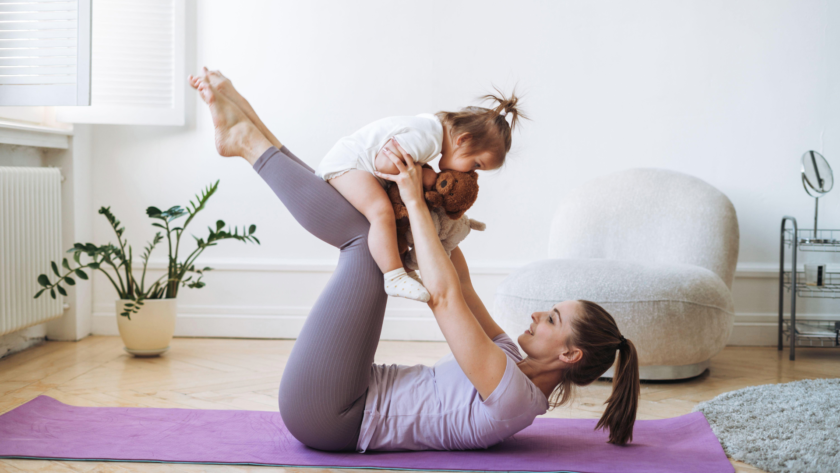
Design short sessions that include kids: stroller walks with intervals, bodyweight circuits where kids mimic moves, or playful strength moves like “kid presses” (holding a toddler safely while doing squats).
Allocate 10–15 minutes where the child participates, then follow with a focused 10-minute solo segment if possible. Use this as bonding time while reinforcing movement habits.
Keep safety first—avoid lifts that risk dropping the child and choose age-appropriate interactions for toddlers and preschoolers.
HIIT and Quick Cardio Bursts for Maximum Efficiency
Short high-intensity intervals maximize calorie burn and cardiovascular gains in 10–20 minutes. Example: 30s high effort (burpees, high knees, jump squats) + 30s rest x 10 rounds.
If impact is a concern, substitute low-impact moves: fast marching, squat pulses, or step-ups. Use perceived exertion or a heart-rate monitor to gauge effort.
Schedule HIIT 1–3 times weekly, interspersed with strength or mobility days to avoid overtraining and preserve energy for parenting tasks.
Managing Diastasis Recti and Safe Exercise Modifications
Check for diastasis recti by performing a gentle crunch test and noting any midline gap or doming. If present, avoid traditional crunches, double-leg lifts, and heavy-loaded carries early on.
Focus on healing progression: transverse abdominis activation, pelvic floor exercises, modified planks, and controlled breathing. Use cueing: draw the belly button toward the spine gently, not forcefully.
Consult a pelvic health physiotherapist for personalized guidance if separation exceeds two finger-widths or if symptoms like back pain persist.
Creating a Sustainable Workout Schedule for Busy Moms
Design a weekly plan balancing 2 strength sessions, 2–3 short cardio or HIIT sessions, and 1 active recovery day. Example: Mon strength (20m), Tue stroller walk (30m), Wed HIIT (15m), Thu strength (20m), Fri active recovery (yoga/stretch 15m).
Build in flexibility for sick kids or schedule shifts: move sessions rather than skip them. Use a visible calendar or shared family app to protect workout times.
Prioritize sleep and adjust intensity when sleep-deprived. Shorter, lower-intensity sessions maintain consistency without excessive fatigue.
Essential Equipment for Home Workouts
Keep a small kit: yoga mat, resistance bands (light–heavy), a set of dumbbells or adjustable kettlebell, and a timer. A stroller suitable for brisk walks and a step or bench add versatility.
Household alternatives: filled backpacks, water jugs, and chairs for incline push-ups or tricep dips. Invest in a supportive sports bra and good shoes for impact protection.
Store equipment in an accessible spot to reduce setup time and increase the likelihood of use.
Self-Care, Nutrition, and Recovery Strategies
Plan quick nutrient-dense breakfasts: overnight oats with Greek yogurt, berries, and nut butter; or scrambled eggs with spinach and whole-grain toast. Hydrate immediately after waking with a glass of water.
Prioritize 10–15 minutes of morning mobility and foam rolling on strength days to reduce soreness. Schedule at least one rest day weekly and use naps or partner support to obtain restorative sleep.
Use simple recovery tools: contrast showers, light stretching, and protein-rich snacks post-workout. Track energy and adjust calorie intake and workout intensity accordingly.